

We know Indoor Air Quality!
About Us | Account | Ozone/Hydroxyl FAQs | Contact


Purify Air and Disinfect Surfaces
For Unoccupied Spaces up to 500 Square Feet. Removes Odors, Kills Bacteria & Viruses from the Air and on Surfaces. View All Water Ozonators
Product Overview:
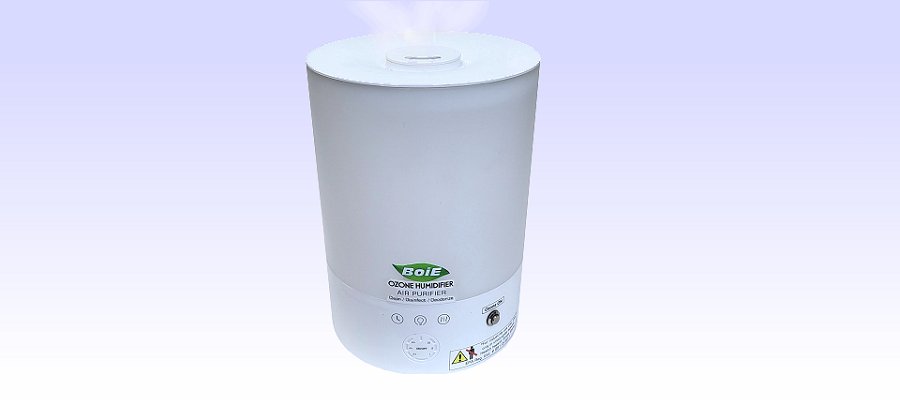
 The BoiE Ozonated Water Humidifier is a portable humidifier
that releases an ozonated water mist to help purify indoor air and disinfect hard and soft surfaces. The unit uses
a revolutionary polymer electrolyte membrane (PEM) that generates an aqueous ozone solution directly from tap water.
The ozonated mist generates hydroxyl radicals that eliminate odors and
break down bacterial spores and pathogens as the mist spreads.
The BoiE Ozonated Water Humidifier is a portable humidifier
that releases an ozonated water mist to help purify indoor air and disinfect hard and soft surfaces. The unit uses
a revolutionary polymer electrolyte membrane (PEM) that generates an aqueous ozone solution directly from tap water.
The ozonated mist generates hydroxyl radicals that eliminate odors and
break down bacterial spores and pathogens as the mist spreads.
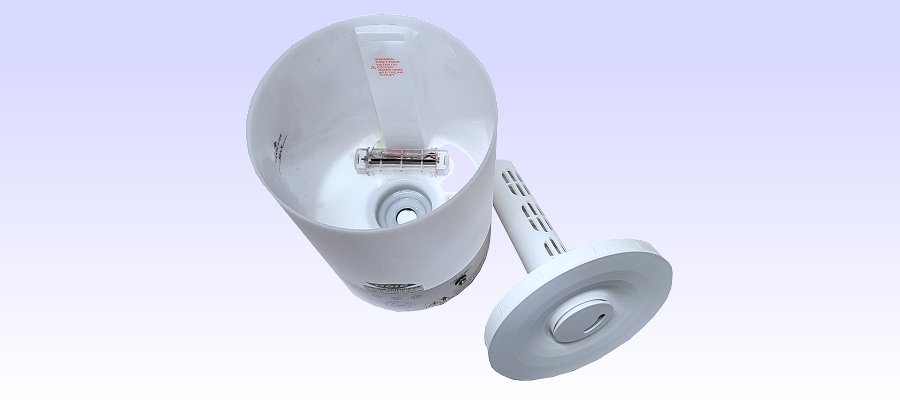
The Ozonated Water Humidifier is odor-free because it generates ozone ozone directly from the water in the reservoir,
not from the air which generally causes strong odors. Just add cold tap water to the internal tank, set the timer
and the machine starts misting an area automatically. The area must be left unoccupied while the humidifier is
running as an ozonated mist may irritate the lungs and eyes.
The device produces a safe, on demand liquid ozone sanitizer that is more powerful than bleach and leaves no chemical
residue. Water is charged with ozone at 3.0 1.0 ppm, that is well above levels needed to neutralize bacteria and
viruses, given sufficient saturation and contact time. Third-party lab tests of our PEM module confirm its ability
to destroy bacteria and viruses in as little as 30 seconds. Expand
Lab Results
|
3rd-Party Laboratory Tests of BoiE's PEM Module |
|||
| Microbes Tested¹ |
Reduction |
Contact |
Sponsor |
| MS2 phage ATCC 15597-B1 (Virus) |
99.9999% |
30 sec |
BoiE |
| ¹Antiviral effectiveness against a non-enveloped virus that is harder-to-kill than the SARS-CoV-2 enveloped virus that causes COVID-19. Double replicate testing performed at Microchem Laboratory, Round Rock, TX on 6/30/2021. Standard: ASTM E2315 Liquid Suspension Time Kill Test. | |||
| Microbes Tested² |
Reduction |
Contact |
Sponsor |
| Escherichia coli (E.coli) |
99.9999% |
30 sec |
BoiE |
| Staphylococcus aureus (Staph) |
99.9999% |
30 sec |
BoiE |
| ²Effectiveness when used as a food-contact sanitizer on hard, non-porous surfaces. Double replicate testing performed at Microchem Laboratory, Round Rock, TX on 4/29/2021. Standard: AOAC 960.09 Germicidal and Detergent Sanitizing Action of Disinfectants. | |||
| Microbes Tested³ |
Reduction |
Contact |
Sponsor |
| Staphylococcus aureus |
>99.99% |
30 sec |
BoiE |
| Klebsiella pneumoniae |
>99.99% |
30 sec |
BoiE |
| Listeria monocytogenes |
>99.99% |
30 sec |
BoiE |
| Salmonella typhii |
>99.99% |
30 sec |
BoiE |
| ³Effectiveness when used as a non-food-contact sanitizer on hard, non-porous surfaces. Testing performed at Microchem Laboratory, Round Rock, TX on 2/11/2021. Standard: ASTM E1153 Test Method for Efficacy of Sanitizers Recommended for Inanimate Non-Food Contact Surfaces. | |||
Use the Ozonated Water Humidifier to clean the air and reduce surface pathogens without using
chemicals. Aqueous ozone has the power to kill bacteria and viruses including corona-type viruses and leaves no
residue behind. Aqueous ozone has been the primary method used to remove pathogens and pesticides from fruits and
vegetables since the FDA approved the use of ozone as a food disinfectant in 1997.[1]
How It Works:
 When
electrolyzed in water, dissolved ozone forms a powerful oxidant and virucide that unlike other cleaners, does not
stain or leave a chemical residue on surfaces after drying. As ozone decomposes in water, it produces hydroxyls
and other reactive oxygen species that attack contamination in the air and on surfaces through a process called
protoplasmic oxidation. When released as an electrostatically charged mist, micron-sized ozonated water droplets
coat and cling to particles in the air and all around surfaces without saturating materials with liquid.[2]
When
electrolyzed in water, dissolved ozone forms a powerful oxidant and virucide that unlike other cleaners, does not
stain or leave a chemical residue on surfaces after drying. As ozone decomposes in water, it produces hydroxyls
and other reactive oxygen species that attack contamination in the air and on surfaces through a process called
protoplasmic oxidation. When released as an electrostatically charged mist, micron-sized ozonated water droplets
coat and cling to particles in the air and all around surfaces without saturating materials with liquid.[2]
The Ozonated Water Humidifier produces a mist particle size down to 0.5 µm (micrometer) in diameter, the
size needed to attack viruses circulating indoors. Particles emitted from the lungs during breathing and speaking
that can transmit viruses, average around 1 µm in size. Hand sprayers emit particles that range from 5 to
40 µm, too large and heavy to remove airborne viruses that are airborne.
Electrical Safety:
The Ozonated Water Humidifier runs off low voltage current that is electrically safe around water. The unit's AC
wall adapter certification requirements for international use. The water reservoir is easy to clean and refill.
The Ozonated Water Humidifier can operate for up to 24 hours. If the unit runs out of water it will automatically
deactivate to prevent damage.
Reasons to Buy:
The Ozonated Water Humidifier is great for cleaning the air and surfaces in small to medium-sized rooms and apartments.
The mist is dry and does not make surfaces wet. The treatment area must be left unoccupied during use* The Ozonated
Water Humidifier is compact, easy to move and won't damage plants or sensitive materials.
Like all BoiE products, the Ozonated Water Humidifier was designed by professionals for professionals to exceed,
outlast and outperform the competition!
Free Bonus
 Hydroxyl Remediator
Certification
Hydroxyl Remediator
Certification
Your purchase includes BoiE's exclusive 32-hour, comprehensive Ozone and Hydroxyl
Remediator certification course. Learn how to utilize hydroxyl generation and properly apply ozone for odor
removal, disinfection and restoration applications. Learn the protocols, how to identify and assess the source
of odors, corrective measures and preparing treatment reports. Provides a path for starting a new business or expanding
your current services. Course includes a helpful Online DVD with demonstration videos. You can enroll and simply
use the course material as a reference if you don't need the certification.
Features:
- Light and portable to fit in small areas
- Replaceable ozone PEM
- Low voltage for electrical safety around water
- Safety-protection for components
- BoiE 1-year warranty
| Specifications | ||
|
Type of Use: |
Odor treatment and sanitizing of air and surfaces | |
|
Case Material: |
Plastic | |
|
Color: |
Black | |
|
Coverage: |
500 square ft (5,000 cubic ft) | |
|
Electrical Rating: |
AC Adapter Input: 100V-240V 50/60Hz Output: 24VDC 1A |
|
|
Reactor: |
Polymer electrolyte membrane (PEM) | |
|
Power Connection: |
5.5mm x 2.5mm | |
|
Power Switch: |
ON/OFF/ 24 Hour Timer | |
|
Size: |
12 x 12 x 8inches | |
|
Weight: |
1 lbs |
* The U.S. FDA limits medical device ozone to 0.05 ppm and requires personal protective equipment (PPE) and eye protection for any persons present when a cleaning device emits a fog or a mist.
Office Hours 8am - 8pm CST Mon.-Fri. CST, 9am - 1pm Sat.
© BOI Environmental Equipment. All rights reserved.